What We Do

Services

Every concrete job we take on, from a small patch to a full driveway.

HomeServices

Everything we take on

Every job below is one we do ourselves across San Angelo.

Concrete Driveways

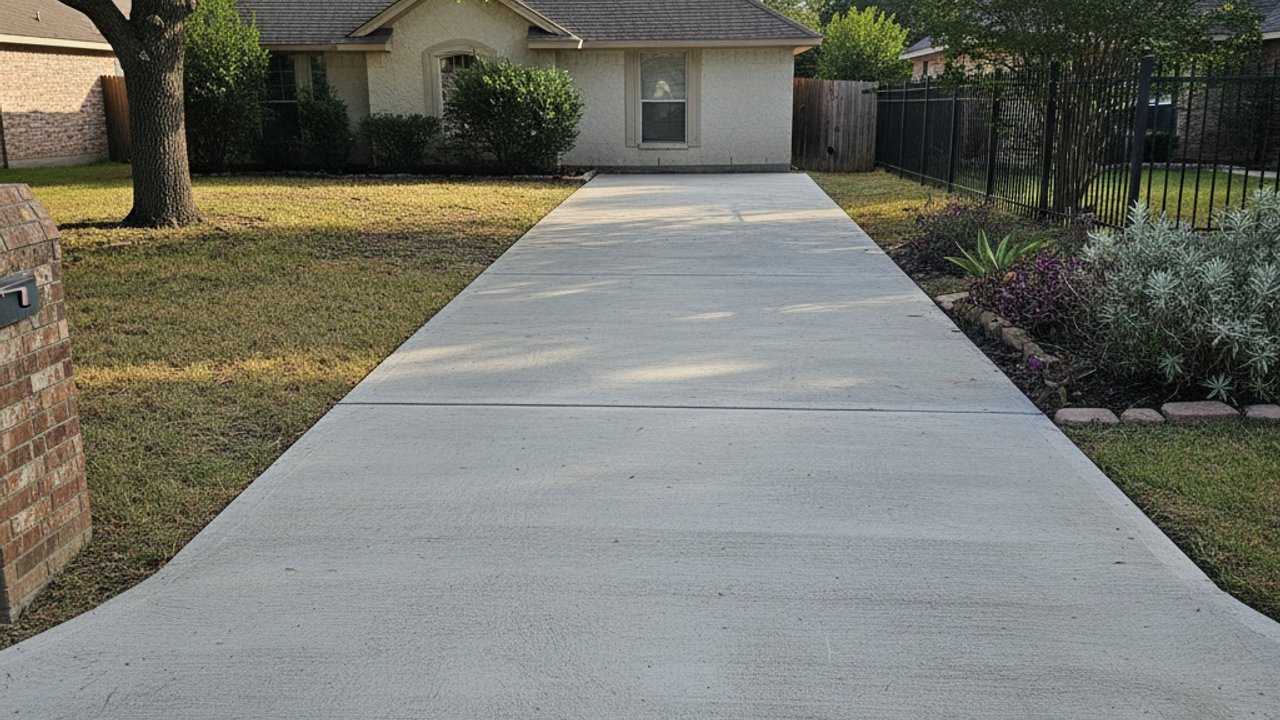
We pour driveways at a minimum of 4 inches, thicker where a heavier vehicle or an RV pad calls for it. Rebar goes in on anything carrying real weight, since wire mesh isn't enough once clay soil starts moving underneath. We grade and compact the base first, because a driveway is only as good as the dirt under it.

Concrete Patios

Patios get broom-finished or stamped depending on what you want to walk on barefoot in July. We slope every patio away from the house so water doesn't pool against the foundation. Control joints go in the same day as the pour, laid out so cracks happen along the joint instead of across your seating area.

Stamped Concrete

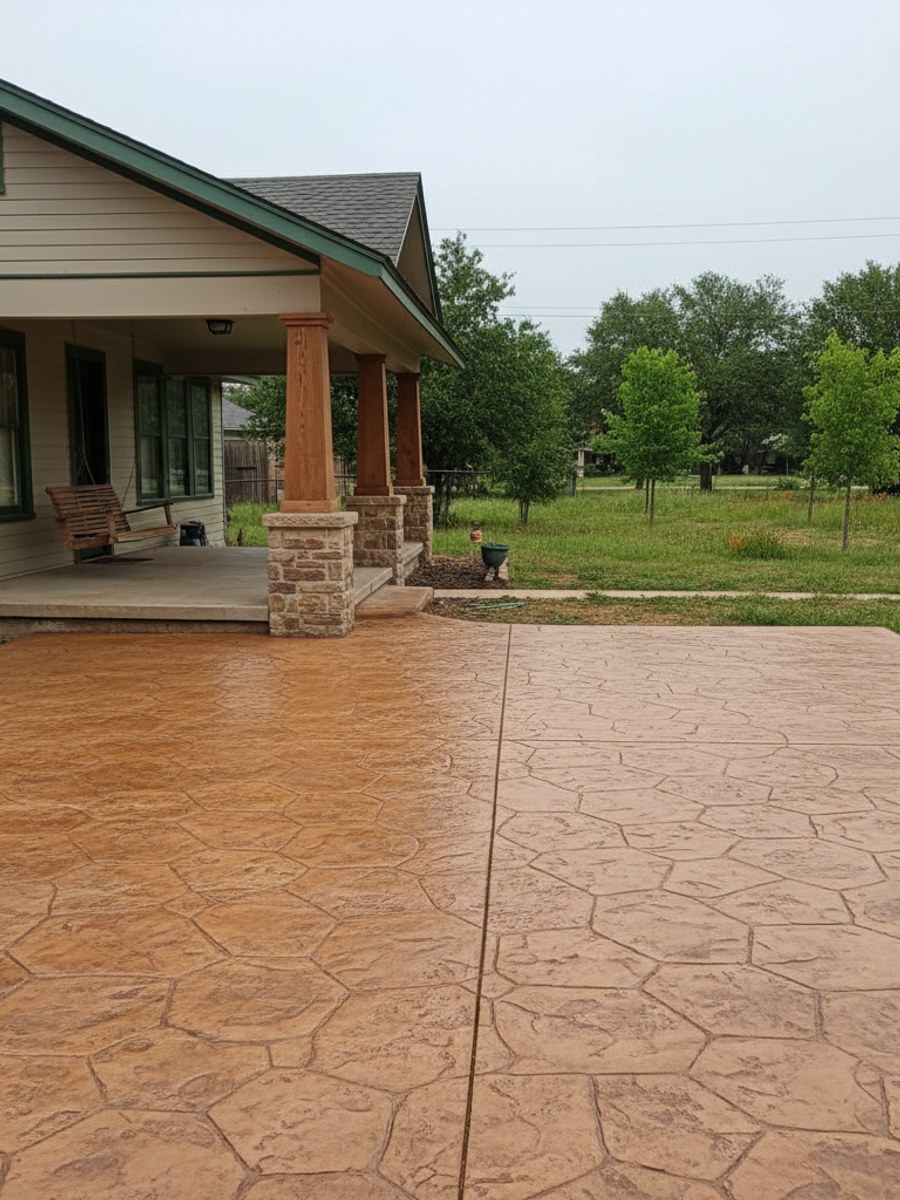
Stamped concrete gets you the look of flagstone, brick or slate at a fraction of the cost, with none of the weeds coming up between joints. We color and texture the slab before it sets, then seal it to hold that color through West Texas sun. It holds up fine on patios and walkways, we'd steer you toward plain concrete on a driveway that sees daily traffic.

Concrete Repair

Cracked slabs, sunken sections and spalling concrete all get looked at before we quote anything. Sometimes a crack is cosmetic and gets filled and sealed, sometimes a section has settled and has to come out and get re-poured. We'll tell you which one it is instead of selling you a full replacement you don't require.

Concrete Foundations & Slabs

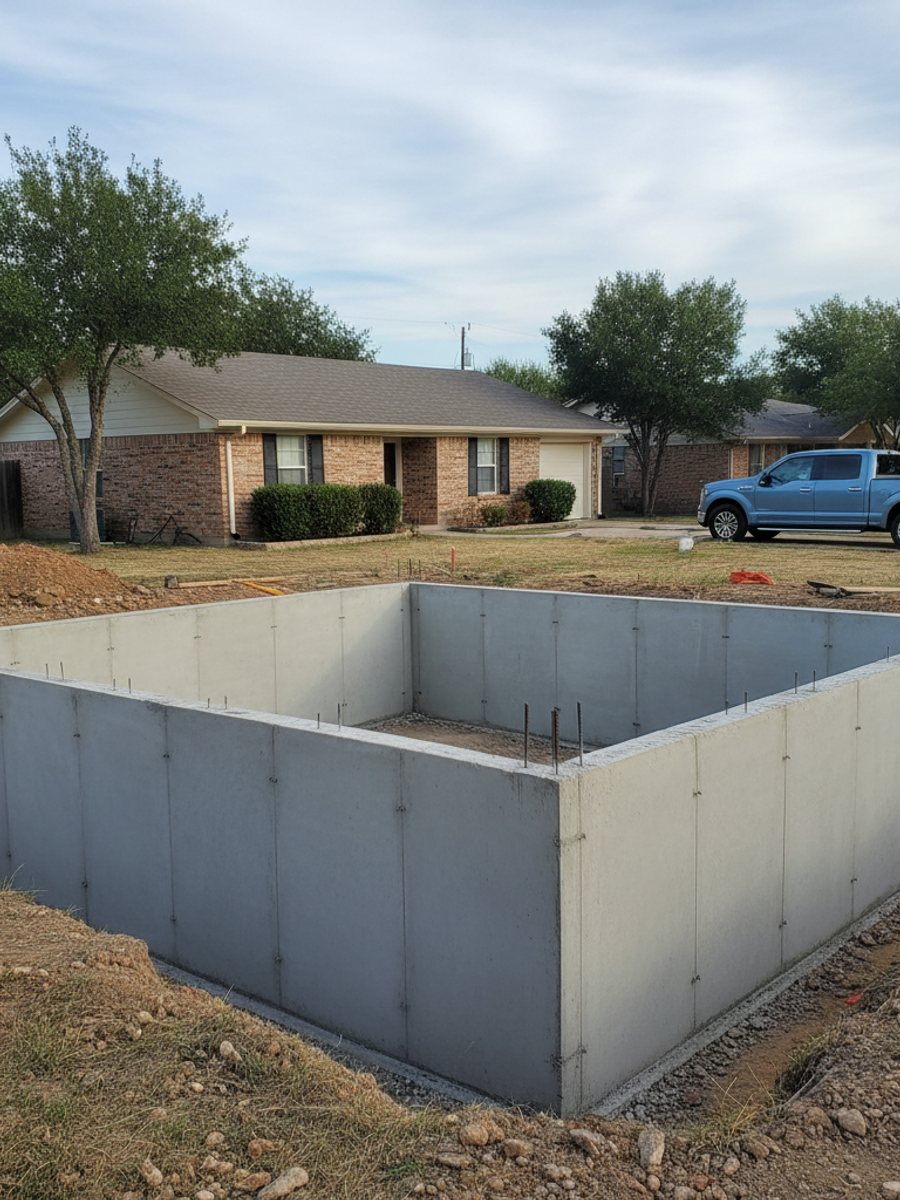
We pour slab foundations for additions, garages and outbuildings, and we don't skip the soil prep to save a day. San Angelo's clay expands and contracts enough to crack a foundation poured without a proper compacted base and moisture barrier. We check grade and drainage before any concrete goes down.

Concrete Sidewalks & Walkways

Walkways get poured to code thickness with joints spaced to control cracking, not wherever the crew happens to stop for the day. We match new sections to existing concrete height where we can, so there's no trip lip where old meets new. Simple work, but it's the kind of job where sloppy grading shows up fast.

Concrete Steps & Porches

Steps and porch slabs call for tighter tolerances than a driveway, since a quarter-inch off on a rise is something people feel with their feet. We form and pour to exact rise and run, and we broom-finish for grip so steps aren't slick when it rains. Old block or railroad-tie porches that have settled get torn out and repoured on a proper footing.

Decorative Concrete Overlays

An overlay resurfaces a driveway or patio that's structurally sound but ugly, chipped or stained, without tearing out the existing slab. We can add color, a broom or stamped texture, or a smoother finish depending on what the surface calls for. It's not a fix for a cracked or heaving slab, that concrete has to come out.

Concrete Demolition & Removal

Old driveways, patios and slabs get broken out and hauled off before new concrete goes in. We check what's underneath first, since old concrete sometimes hides drainage problems or bad fill that caused the failure in the first place. Removal is priced separately from the new pour so you can see what each part actually costs.

Concrete Curbing

Decorative curbing edges flower beds, driveways and walkways without the upkeep of brick or timber edging. It's a smaller pour than a driveway or patio, but it still calls for a compacted base or it'll heave the same way a slab does. We can match color and texture to existing concrete on the property.

How It Works

Four steps, and no surprises in any of them.

01

We come and look

You tell us what you want doing, we look at what is actually there, and we ask the awkward questions early.

02

You get a price

In writing, itemised, free. If something might add cost later we flag it now rather than at the end.

03

We do the work

Same crew throughout. We cover your floors, keep the dust down and tidy up before we leave each day.

04

We walk it with you

You point out anything you are not happy with and we fix it before the invoice, not after.

Where We Work

All of this, across San Angelo, TX

We haul concrete trucks out to most of the Concho Valley.

San Angelo, TX
Ballinger, TX
Grape Creek, TX
Eldorado, TX
Eden, TX
Robert Lee, TX
Bronte, TX
Carlsbad, TX
Miles, TX
Wall, TX
Christoval, TX
Common Questions

Things worth asking

Questions that come up once a project's actually underway.

Do I need a permit to pour a new driveway or patio?
Permit requirements for a new driveway or patio depend on the city or county, and San Angelo may require a permit for work that affects drainage, sits near a property line, or connects to a public street. A contractor pulling permits as part of the job should handle the paperwork, but it's worth confirming that's included in the quote.
How long does a typical concrete pour take?
A standard driveway or patio pour usually takes one day for the concrete itself, though forming and site prep beforehand can add one to two more days depending on size and soil conditions. Curing takes longer than the pour, generally several days before foot traffic and about a week before vehicles should drive on it.
Can you work within a specific budget?
Concrete jobs can often be adjusted to fit a budget by changing slab thickness within code minimums, choosing wire mesh over rebar on lighter-use areas, or picking a broom finish instead of stamped or colored concrete. A contractor should lay out where the cost comes from so it's clear what's being traded off, rather than cutting corners silently.
Do you offer a warranty on concrete work?
Concrete contractors typically warranty workmanship, like improper joint placement or finishing issues, for a set period after the pour, though normal weathering and minor cracking along a joint usually aren't covered since that's expected behavior in concrete. Warranty terms should be written into the quote, not just promised verbally.
Who will I be dealing with during the project?
On most concrete jobs, a single point of contact, often the crew lead or estimator, handles scheduling and questions throughout the project rather than passing the homeowner between different people. Having one contact matters when a pour date has to shift for weather or when a decision about finish or color calls for a fast answer.
What type of concrete mix do you use?
Standard residential concrete work generally uses a 3,000 to 4,000 PSI mix, with higher strength mixes used for driveways that see heavier vehicles or for areas exposed to more freeze-thaw cycling. The right mix also depends on reinforcement type and slab thickness, so it's usually specified in the written quote.
Can I still use my driveway or patio during the work?
A driveway or patio being replaced isn't usable during demolition, forming and the pour itself, and needs about a week after pouring before vehicles should drive on it, though foot traffic is usually fine after a few days. Homeowners should plan alternate parking for the duration of a driveway replacement.
How should I prepare the site before you arrive?
Clearing the work area of vehicles, furniture, potted plants and anything stored on or near the existing concrete makes demolition and the pour go faster. Sprinkler lines, buried cables or irrigation near the pour site should be flagged or marked ahead of time so they aren't hit during excavation.
What if you find a problem once the old concrete is removed?
Removing old concrete sometimes uncovers poor soil, tree roots, broken drainage pipe, or fill dirt that wasn't compacted properly, usually the reason the original slab failed. When that happens, the area gets addressed, often with additional excavation and base material, before new concrete goes down, and that added cost gets discussed before proceeding.
How do I take care of new concrete after it's poured?
New concrete shouldn't be driven on for about a week and shouldn't be sealed until it's fully cured, usually around 28 days. Sealing every few years, keeping deicing salts off the surface in winter, and filling small cracks early before they widen are the main things that keep a slab looking good long-term.

Not sure what you need?

Describe the problem and we will tell you what it probably is. No obligation.
Call (325) 312-3940